
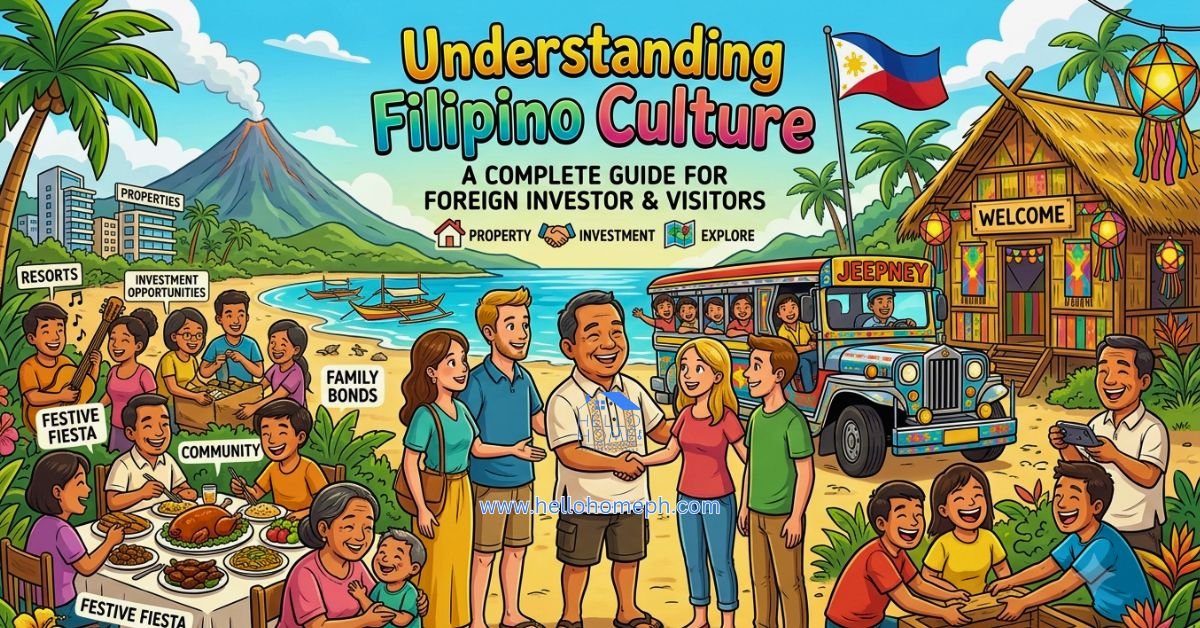
Understanding Filipino Culture: A Complete Guide for Foreign Investors and Visitors Planning to Explore or Buy Property in the Philippines
The Philippines is more than a tropical destination of white sand beaches and vibrant cities it is a country defined by its people. For foreigners planning to visit, invest, or buy property in the Philippines, understanding Filipino culture is not just helpful; it is essential. The warmth, values, and traditions of Filipinos shape everything from daily interactions to business relationships and even real estate transactions.

This well‑researched guide explores the heart of Filipino culture, supported by insights from credible sources such as the Philippine Department of Tourism, National Commission for Culture and the Arts (NCCA), and Philippine Statistics Authority (PSA) — helping you navigate the country with confidence and cultural awareness.
1. Filipino Hospitality: “The Warmest Welcome in Asia”
Filipino hospitality is legendary. Visitors often describe the Philippines as one of the friendliest countries in the world — and for good reason. Filipinos naturally make guests feel at home, offering food, assistance, and genuine warmth even to strangers.
This cultural trait extends to real estate as well. Foreign buyers often find Filipino real estate agents approachable, patient, and eager to help. Whether you’re exploring a condominium in Manila or a beachfront property in Cebu, expect a welcoming experience.
Why this matters for investors:
- Negotiations tend to be friendly and relationship‑driven.
- Trust and rapport are highly valued.
- Agents often go the extra mile to assist with documents, tours, and local guidance.
2. Strong Family Values and Community‑Centric Living
Family is the cornerstone of Filipino life. The Philippines has one of the strongest family‑oriented cultures in Asia, with extended families often living close to one another or even in the same household.
This influences property preferences:
- Many Filipinos prefer homes near relatives.
- Subdivisions with parks and communal spaces are popular.
- Multi‑generational homes are common.
For foreigners investing in property, this explains why family‑friendly amenities — playgrounds, clubhouses, security, and open spaces — are major selling points in Philippine real estate developments.
3. Respect, Politeness, and the “Po” and “Opo” Culture
Filipinos show deep respect for elders and authority figures. The use of “po” and “opo” in conversations signifies politeness and humility. Bowing slightly or taking an elder’s hand to perform “mano” (a gesture of respect) is also common.
Foreigners will notice:
- People address you formally, especially in business settings.
- Service staff often use honorifics like sir and ma’am.
- Courtesy is embedded in everyday interactions.
This respectful culture creates a pleasant environment for foreign visitors and investors who value professionalism and warmth.
4. Food, Festivities, and the Joy of Sharing
Filipinos love celebrations — from small gatherings to grand fiestas. Food is central to Filipino culture, symbolizing generosity and community.
Popular dishes include:
- Adobo – a national favorite
- Sinigang – a comforting sour soup
- Lechon – roasted pig, often served at celebrations
- Halo‑halo – a colorful dessert perfect for tropical weather
For foreigners relocating to the Philippines, expect frequent invitations to meals, celebrations, and community events. These gatherings are excellent opportunities to build relationships and understand local life.
5. A Culture Deeply Connected to Faith and Tradition
The Philippines is predominantly Christian, with over 80% of the population identifying as Roman Catholic (PSA). Religious festivals, church activities, and spiritual traditions play a major role in Filipino identity.
This influences:
- Holidays and work schedules
- Community events
- Local customs and etiquette
Foreigners investing in property will notice that many developments include chapels, prayer rooms, or are located near churches — reflecting the cultural importance of faith.
6. Modern Yet Traditional: A Blend of East and West
The Philippines is a unique cultural blend shaped by Malay roots, Spanish colonization, American influence, and Asian traditions. This fusion is visible in architecture, language, education, and lifestyle.
For real estate investors, this means:
- Modern condominiums with Western‑style amenities
- Homes influenced by Spanish design
- English widely spoken (one of the country’s official languages)
The Philippines consistently ranks among the world’s largest English‑speaking nations, making communication easy for foreign buyers.
7. Relationship‑Driven Business Culture
In Filipino culture, trust is built through personal relationships. Business deals — including property purchases — often progress more smoothly when rapport is established.
Tips for foreign investors:
- Be patient; Filipinos value friendly conversation before formal discussions.
- Showing respect and humility goes a long way.
- Follow‑ups are appreciated but should be polite and warm.
Real estate agents in the Philippines often prioritize long‑term relationships over quick transactions, which benefits foreign buyers seeking reliable partners.
8. Why Understanding Filipino Culture Matters for Foreign Buyers
Whether you’re planning to retire in the Philippines, invest in rental properties, or purchase a vacation home, cultural awareness helps you:
- Build trust with agents and sellers
- Navigate negotiations smoothly
- Integrate into local communities
- Make informed decisions about location and lifestyle
Websites like the Philippine Department of Tourism (tourism.gov.ph), NCCA (ncca.gov.ph), and PSA (psa.gov.ph) offer credible cultural and demographic insights that support your research.
Final Thoughts: The Heart of the Philippines Is Its People
Filipino culture is warm, vibrant, and deeply rooted in values that make the country welcoming to foreigners. Whether you’re visiting for the first time or exploring investment opportunities through HelloHomePH, understanding the culture enriches your experience and helps you make meaningful connections.