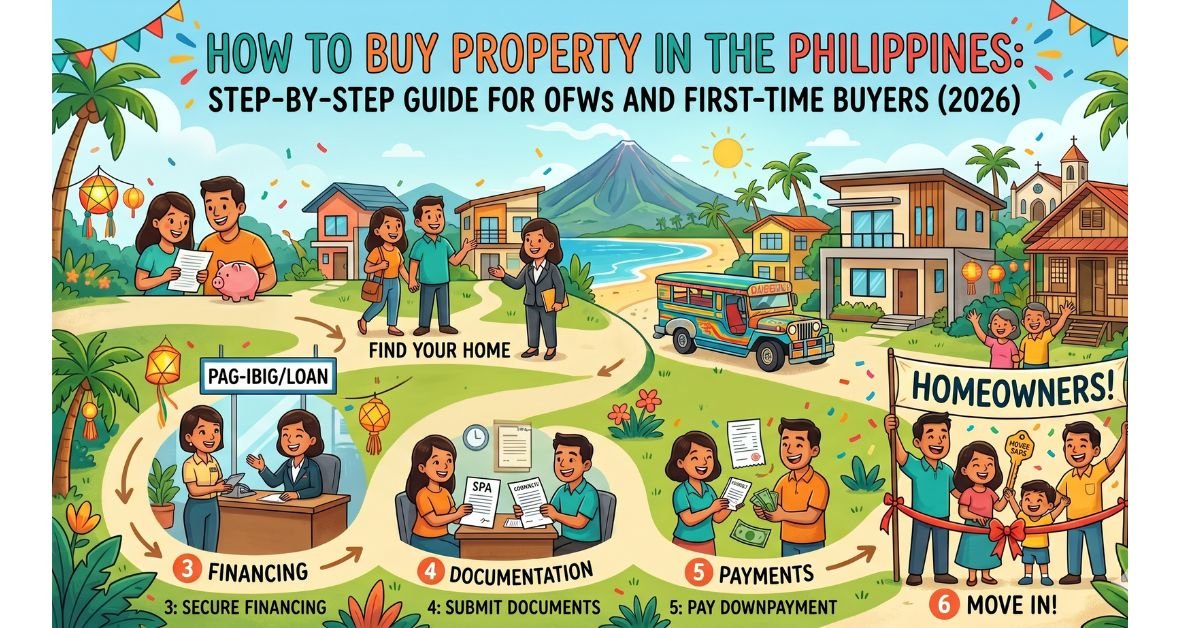
How to Buy Property in the Philippines: Step-by-Step Guide for OFWs and First-Time Buyers (2026)
Buying property in the Philippines is a major financial milestone—especially for Overseas Filipino Workers (OFWs) and first-time buyers. With rising demand, flexible payment schemes, and expanding developments across key cities, 2026 presents strong opportunities for both homeownership and investment. However, navigating the process requires proper knowledge, planning, and the right guidance.
This comprehensive guide walks you through the step-by-step process of buying property in the Philippines, ensuring a smooth and secure transaction.
Why Invest in Philippine Real Estate in 2026?
The Philippine property market remains resilient, driven by urbanization, infrastructure projects, and a growing middle class. Demand continues to be strong, especially in affordable housing and suburban developments. [federalland.ph]
For OFWs, investing in property also offers:
- A long-term asset in their home country
- Rental income potential
- A future retirement home
Step 1: Determine Your Budget and Financing Options
Before searching for property, assess your finances.
Common financing options:
- Bank financing – ideal for long-term payment plans
- In-house financing – flexible but with higher interest
- Pag-IBIG housing loan – popular and affordable for Filipinos
Developers are increasingly offering flexible payment terms to attract buyers, especially in the mid-income segment. [colliers.com]
Tip: Make sure your monthly payments do not exceed 30–40% of your income.
Step 2: Choose the Right Property Type
Decide what fits your lifestyle and investment goals:
Options include:
- Condominium units – ideal for city living and rental income
- House and lot – best for families and long-term use
- Lot-only properties – for future development
There is increasing demand for house and lot developments outside Metro Manila, offering better space and affordability. [richestph.com]
Step 3: Select the Best Location
Location is one of the most important factors.
Popular areas:
- Metro Manila (Makati, BGC, Quezon City)
- Cebu and Davao (growing urban hubs)
- Cavite, Laguna, Bulacan (emerging residential areas)
Infrastructure developments continue to boost property value, especially in connected provinces and regional hubs. [ayalaland.com]
Tip: Consider accessibility, future developments, and rental demand.
Step 4: Work with a Licensed Real Estate Professional
Always deal with a licensed real estate broker or agent.
Why this is important:
- Ensures legitimacy of transactions
- Helps verify property documents
- Protects you from scams
For OFWs: Your agent can assist remotely via online consultations and digital transactions.
Step 5: Prepare the Necessary Documents
Basic requirements:
- Valid IDs
- Tax Identification Number (TIN)
- Proof of income (especially for loans)
For OFWs:
- Passport
- Employment contract
- Special Power of Attorney (SPA), if a representative will sign on your behalf
Tip: Complete documents early to avoid delays.
Step 6: Reserve the Property
Once you’ve chosen a property:
- Pay the reservation fee (usually ₱10,000–₱50,000)
- Secure your preferred unit
Reservation fees are generally non-refundable, so ensure you are decided before proceeding.
Step 7: Review and Sign Contracts
Key documents include:
- Contract to Sell (CTS)
- Deed of Absolute Sale (DOAS)
Carefully review terms such as:
- Payment schedule
- Turnover date
- Penalties or cancellation terms
Tip: Consult a legal expert if needed to fully understand the contract.
Step 8: Complete Down Payment and Loan Processing
- Pay the required down payment (usually 10%–30%)
- Apply for bank or Pag-IBIG financing
Loan approval may take weeks, depending on requirements and documentation.
Step 9: Property Turnover and Title Transfer
Once fully paid or financed:
- Property is turned over to you
- Title transfer to your name begins
Ensure all taxes and fees are settled, including:
- Documentary Stamp Tax
- Transfer Tax
- Registration fees
Common Mistakes to Avoid
- Not checking the developer or title legitimacy
- Ignoring hidden fees and charges
- Choosing location without researching demand
- Overcommitting financially
Buying property is a long-term investment—always do due diligence.
Final Thoughts
Buying real estate in the Philippines is a rewarding investment when done right. Whether you’re an OFW planning for the future or a first-time buyer, following these steps will help you make informed decisions and avoid costly mistakes.
With property searches now largely happening online, being informed gives you a strong advantage in securing the best property deals.